ESG Strategy & Sustainability Reporting Advisory in Malaysia

ESG reporting in Malaysia is becoming more structured. Listed companies face clearer disclosure requirements, while investors, banks, customers and multinational buyers increasingly expect reliable sustainability information. EcoSphere Sustainability Solutions Sdn. Bhd. provides ESG strategy and sustainability reporting advisory in Malaysia for companies that need a practical way to plan, measure and report their sustainability performance.

We help businesses build an ESG framework around their actual operations, risks and reporting requirements. Our Malaysia team supports listed companies, large private businesses, manufacturers, financial institutions, property and construction companies, and multinational organisations operating across the country.

Request ESG Consultation
ESG strategy and sustainability reporting advisory services in Malaysia

Why ESG Strategy matters for Malaysian businesses

A sustainability report should not begin at the report-writing stage. Companies first need to understand which ESG matters affect the business, who owns the data, what to measure, and how to manage progress. Otherwise, teams often end up collecting information from different departments close to the reporting deadline.

A clear ESG strategy in Malaysia helps connect sustainability with governance, risk, business planning and disclosure. It can also help your organization prepare for changing reporting requirements and more detailed requests from investors, lenders, customers and supply-chain partners.

Malaysia's National Sustainability Reporting Framework (NSRF) uses IFRS S1 and IFRS S2 as the baseline sustainability disclosure standards. Implementation is phased across Main Market issuers, ACE Market issuers and certain large non-listed companies.

Call for Consultation: +60 11 6768 5759
ESG Strategy matters for Malaysian businesses

Our ESG Strategy & Sustainability Reporting services in Malaysia

We work across the strategy and reporting cycle. The work can start with an existing sustainability programme or from the beginning if your company has not yet developed a formal ESG structure.

ESG reporting and disclosure support services in Malaysia

ESG Reporting and Disclosure support

Prepare sustainability reports and ESG disclosures aligned with Malaysian requirements, including NSRF and IFRS S1/S2. We support reporting boundaries, data review, gap analysis and disclosure preparation.

ESG strategy and policy development services in Malaysia

ESG Strategy and policy development

Build a practical ESG strategy and roadmap around your business risks, priorities and reporting obligations. We define policies, focus areas, responsibilities, KPIs, targets and implementation timelines.

ESG governance KPI and target setting services in Malaysia

ESG governance, KPIs and target setting

Set clear ESG governance and accountability across management and operational teams. We define data owners, reporting responsibilities, measurable KPIs and realistic targets that can be tracked over time.

ESG rating and benchmarking support services in Malaysia

ESG rating and benchmarking support

Review your current ESG practices against selected industry benchmarks, ratings or assessment criteria. We identify disclosure, policy and data gaps that may affect external evaluations or stakeholder confidence.

ESG risk management and due diligence services in Malaysia

ESG Risk Management and due diligence

Identify environmental, social and governance risks within operations, investments or supply chains. We assess exposure, highlight priority issues and support integration into wider risk management and decision-making processes.

ESG training and internal capacity building services in Malaysia

ESG training and internal capacity building

Build internal ESG capability through practical training for boards, management and reporting teams. Sessions focus on ESG responsibilities, data collection, reporting requirements and implementation relevant to each role.

Previous Icon
Next Icon

Sustainability Reporting requirements in Malaysia

Malaysia's sustainability reporting landscape has moved into a more formal phase. Under the National Sustainability Reporting Framework, IFRS S1 and IFRS S2 serve as the baseline standards for applicable companies. The rollout is phased. Group 1 Main Market issuers with market capitalization of RM2 billion and above started for annual reporting periods beginning on or after 1 January 2025.

Other Main Market issuers, known as Group 2, start from 2026. Group 3 covers ACE Market issuers and large non-listed companies with annual revenue of RM2 billion and above, beginning in 2027. The framework also takes a climate-first approach, with transition reliefs provided during implementation. Scope 3 greenhouse gas disclosure requirements are introduced later according to the applicable group.

For businesses, this means sustainability reporting cannot be treated as a last-minute annual exercise. Businesses need to organise governance, data boundaries, internal responsibilities, financial impact assessment, and ESG data collection before preparing the disclosure.

Common ESG Reporting Challenges in Malaysia

Businesses often come to us when sustainability activities already exist, but the information is scattered. We first identify where the gaps are. Then we work on the parts that need fixing. Common issues include:

  • No clear ESG strategy or sustainability roadmap
  • Difficulty understanding NSRF, IFRS S1 and IFRS S2
  • ESG information held by different departments
  • Weak data ownership or internal reporting controls
  • No defined materiality assessment process
  • ESG targets without clear KPIs or baselines
  • Inconsistent disclosures from one year to another
  • Limited internal experience with sustainability reporting
  • Difficulty preparing information for management, investors or stakeholders
Request ESG Consultation

Common ESG reporting challenges faced by businesses in Malaysia

Industries we support with ESG Strategy & Reporting

Our ESG consulting services in Malaysia can support businesses from manufacturing and industrial operations to multinational operations. Reporting priorities differ from one sector to another. We reflect those differences in the materiality assessment, ESG roadmap and reporting structure.

Manufacturing and Industrial Icon
Manufacturing & Industrial
Manufacturing and Industrial Industry
Energy and Power Plant Icon
Energy & Power Plant
Energy and Power Plant Industry
Banking and Financial Institutions Icon
Banking & Financial Institutions
Banking and Financial Institutions Industry
Oil and Gas Icon
Oil & Gas
Oil and Gas Industry
Real Estate and Infrastructure Icon
Real Estate & Infrastructure
Real Estate and Infrastructure Industry
Technology and Telecommunications Icon
Technology & Telecommunications
Technology and Telecommunications Industry
Chemical and Pharmaceutical Icon
Chemical & Pharmaceutical
Chemical and Pharmaceutical Industry
Maritime and Shipping Icon
Maritime & Shipping
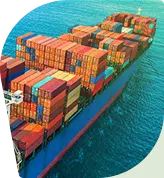
Maritime and Shipping Industry

Our ESG Strategy development process

We follow a standard structured process to ensure practical and measurable results. This structured framework ensures your ESG strategy translates into actionable, operational processes rather than remaining a theoretical framework.

01
Initial ESG Assessment

We review your current sustainability practices, reporting history, policies, business activities and applicable reporting requirements.

02
Stakeholder and Materiality Review

We identify relevant ESG issues, stakeholder expectations, business risks and sustainability-related opportunities.

03
Strategy and Target Setting

We convert priority areas into ESG objectives, policies, KPIs, and measurable targets.

04
ESG Roadmap Development

We establish responsibilities, timelines and practical actions so different teams know what needs to happen and when.

05
Implementation and Data Support

We work with internal teams on ESG data collection, governance, documentation and implementation requirements.

06
Reporting and Improvement

We support sustainability disclosure preparation and review performance so the ESG strategy can be updated as the business and reporting environment change.

Why choose EcoSphere Sustainability Solutions Sdn. Bhd. for ESG Strategy & Reporting Advisory in Malaysia?

EcoSphere Sustainability Solutions Sdn. Bhd. combines ESG strategy, sustainability reporting and technical sustainability knowledge in one advisory approach. We do not start by filling a reporting template. We first look at your business, reporting obligations, current data and sustainability risks. We can assist from the first ESG assessment through strategy development, data organisation and sustainability reporting preparation.

  • Strong knowledge of Malaysia’s ESG and sustainability requirements
  • Experience with NSRF, Bursa Malaysia and IFRS S1/S2 reporting
  • Global best practices aligned with local compliance
  • Structured, business-focused ESG roadmaps
  • Practical and implementation-ready strategies
  • Support from assessment to reporting
Contact Us Today!
ESG strategy and sustainability reporting advisory services in Malaysia
Strengthen Your ESG Strategy

EcoSphere Sustainability Solutions Sdn. Bhd. helps Malaysian businesses improve ESG reporting with clear priorities, reliable data and practical sustainability strategies.

Our Malaysia office is at Level-23A, Menara Allianz Sentral, 203, Jalan Tun Sambanthan, 50470 Kuala Lumpur, Malaysia, serving organisations throughout Malaysia.

Get Your
Free Consultation

FAQs about ESG Strategy and Sustainability Reporting in Malaysia

Here are answers to some of the most frequently asked questions about ESG strategy, NSRF compliance, and sustainability reporting requirements in Malaysia.

What is ESG Strategy consulting in Malaysia?

ESG strategy consulting helps a company decide which environmental, social and governance issues need attention and how they should be managed. It normally covers materiality, governance, policies, KPIs, targets and an implementation roadmap. Reporting then tracks what the company has actually done.

Is Sustainability Reporting mandatory in Malaysia?

Requirements depend on the type of company. Bursa Malaysia-listed issuers fall within sustainability reporting requirements, while the NSRF phases in IFRS S1 and IFRS S2 for Main Market issuers, ACE Market issuers and certain large non-listed companies. Other businesses may also report voluntarily.

What are IFRS S1 and IFRS S2 in Malaysia?

IFRS S1 deals with disclosure of sustainability-related risks and opportunities that could affect a company's prospects. IFRS S2 focuses specifically on climate-related disclosures. Malaysia's NSRF uses these ISSB Standards as its baseline.

What is the difference between ESG Strategy and Sustainability Reporting?

An ESG strategy sets the direction—priorities, responsibilities, targets and actions. Sustainability reporting explains the company's performance, risks, progress and relevant disclosures. A report is much easier to prepare when a working strategy and data process already exist behind it.

Do private companies in Malaysia need ESG Reporting?

Not every private company currently falls under mandatory NSRF reporting. However, large non-listed companies with annual revenue of RM2 billion and above are included in Group 3 from 2027. Other private companies may still face ESG requests from lenders, customers, investors or multinational supply chains.

How do we start developing an ESG Strategy?

So first look at what the company is doing today, and where the gaps are. Identify material ESG issues, stakeholders, regulatory exposure and existing data. Governance roles, targets, KPIs and a realistic implementation roadmap can be developed from there.

How long does ESG Strategy and Reporting preparation take?

Not all companies have a fixed term. A business with structured data and existing policies can act more quickly than a business that is collecting ESG information for the first time. The timeframe is also impacted by the company size, reporting scope, number of stakeholders involved and business units.

Apakah laporan kemampanan wajib untuk syarikat di Malaysia?

Keperluannya bergantung pada jenis dan saiz syarikat. Syarikat tersenarai di Bursa Malaysia serta syarikat tertentu di bawah NSRF perlu memenuhi keperluan pelaporan mengikut jadual pelaksanaan yang ditetapkan. Syarikat lain juga boleh membuat pelaporan secara sukarela mengikut keperluan pelanggan, pelabur atau pasaran.

Apakah perbezaan antara Strategi ESG dan laporan kemampanan?

Strategi ESG menentukan keutamaan, sasaran, tanggungjawab dan tindakan syarikat dalam aspek alam sekitar, sosial dan tadbir urus. Laporan kemampanan pula menerangkan prestasi dan kemajuan yang telah dicapai. Strategi yang jelas menjadikan proses pengumpulan data dan pelaporan lebih tersusun.

Other pages you may be interested in...

Looking for ESG and sustainability consulting in Malaysia? We cover carbon reporting, Bursa Malaysia compliance, net zero planning, and supply chain ESG.

Improve your EcoVadis sustainability rating in Malaysia with expert support for assessment preparation, gap analysis, evidence, and score improvement.

Build a practical industrial decarbonization plan in Malaysia with Scope 1–3 measurement, energy efficiency, and NETR-aligned roadmaps. Book a consultation.

Top